

Preparing Young People for the Workforce Using the Skill Tree
By Thom Kleiner, Executive Director, Westchester-Putnam Workforce Development Board
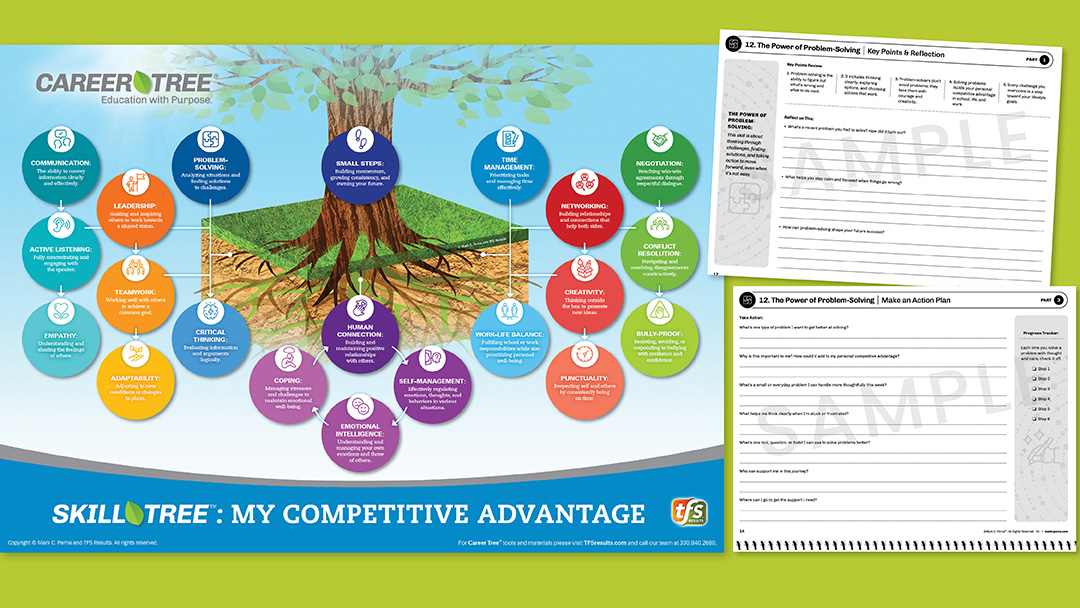
As my staff and I meet with employers across Westchester and Putnam, we continue to hear a consistent concern: too many job seekers and even current employees are entering the workplace without the interpersonal and professional “soft skills” needed to thrive. Employers tell us that even when they find candidates with the needed technical training and academic credentials, it’s the lack of professional skills like communication, reliability, and teamwork that can undermine a new hire’s success on the job.
In a Wall Street Journal 2016 survey of nearly 900 executives, 92% said soft skills are as important as or more important than technical skills — and 89% said such skills are difficult to find among candidates. The deficit of these human skills has become the missing ingredient in our workforce that needs to be solved, as such skills form the foundation of strong workplace culture and a thriving economy.
To my knowledge, no one has pinpointed why and when this systemic issue first surfaced, but it’s clear that action is needed. That’s why, when I learned about the Skill Tree, I immediately supported it as a viable solution we need to adopt and help spread the word. The Skill Tree is graphic depiction and a flexible lesson framework for the 21 essential professional skills everyone needs to thrive in school and in the workplace — things like human connection, self-management, critical thinking, and conflict resolution. It was launched in August 2025 by Mark C. Perna to complement the Career Tree he created.
While the Career Tree is a dynamic visual tool designed to help students understand the full range of career opportunities within any sector, the Skill Tree lays out the foundation of professional skills needed for every life situation — whether it be school, work, family, and friends. Designed for learners from Pre-K through college and young adults entering the workforce, the Skill Tree lays out a flexible lesson plan for developing the 21 essential skills.
“To build a competitive advantage, a person needs Academic Knowledge and Technical Competency as well as Professional/Life Skills. But Professional Skills were not being taught,” says Perna. “I’ve traveled all over the world speaking to educators, civic leaders, and employers, and it became clear that something needed to be done.”
“I originally came up with a list of 20 professional skills when it occurred to me that we had missed the most crucial one. We need to get young people to understand the power of simple consistency, the ability to take a small step every day, as that is what builds momentum. So, we added ‘Small Steps’ as the first and most important skill, which is depicted as the trunk of the tree,” Perna explains.
Through interactive tools such as action journals, group discussions, skill charts, and visual progress trackers, students actively engage in developing these skills over time. This hands-on approach ensures that learning isn’t just theoretical — it’s tangible and directly applicable to real-world situations.
Shannon Fisher, school counselor and behavior specialist in the Deer Valley Unified School District in Phoenix, Arizona is part of a Skill Tree pilot program and has been instrumental in helping the K-8th grade staff learn how to fully utilize the lesson framework in all kinds of inventive and flexible ways.
“We use the Skill Tree for everything. Once the school district has a license, any teacher or counselor can download the materials and integrate it into their lesson plan or enrichment program. For example, I use it for my behavior academies where I have students that need to correct classroom behavior issues. This week, we worked on human connection. Our Physical Education teacher uses Skill Tree for his 7th and 8th grade entrepreneurship class. I also use it for my weekly 15 minute ‘Lunch Bunch’ sessions I run K-8. We sit in a circle and read what’s called a social story, and then we ask questions or go into an activity,” explains Fisher.
“Kids of every age are completely engaged because they like learning relevant things they need to know in life. They want to learn professional skills and would love it if we did it every day — they beg to have more time. One student enthusiastically shared, ‘I love learning life skills because I can be in charge of how awesome I am.’” Fisher has also been compiling data to share the successes with other educators. She collects feedback from the students themselves gleaned from their journals, as well as stats from the administrative office, which show a decrease in behavior issues and office referrals.
For parents, the Skill Tree provides a roadmap for supporting their child’s growth — not just academically, but in ways that prepare them for independence, responsibility, and career readiness. For students, it’s a chance to discover strengths, build confidence, and develop the abilities employers are looking for today and in the future. It’s also useful for employers to use with their staff. An owner of 45 McDonald’s franchises in Lafayette, Louisiana recently started using Skill Tree to train current employees and new hires.
The potential of Skill Tree is limitless, which is why the Westchester-Putnam Workforce Development Board and Career Center staff support the use of the Skill Tree Lesson Framework as a tool to help people develop professional skills alongside their technical and academic training. When individuals strengthen these skills, they don’t just become more employable — they become better equipped to thrive in their careers and life. We hope everyone reading this article will take the next step to learn more.
21 Vital Skills for School, Work & Beyond
The Skill Tree lesson framework equips students with 21 interrelated professional and life skills that are relevant at every age and stage, helping them succeed in school, the workplace, and beyond.
Small Steps & Consistency teaches students to build momentum, grow consistent habits, and take ownership of their future. Human Connection emphasizes building relationships, creating trust, and growing through interactions with others. Self-Management encourages taking ownership, focusing attention, and following through on commitments. Emotional Intelligence helps learners understand emotions, navigate relationships, and lead with insight, while Coping develops resilience by managing stress and building inner strength.
Communication and Active Listening are central to effective interaction, teaching students to express ideas clearly, listen well, and build mutual understanding. Empathy helps students connect with others, fostering compassion and stronger relationships. Leadership inspires taking responsibility, making a positive impact, and guiding others, complemented by Teamwork, which focuses on collaboration, shared responsibility, and mutual growth.
Adaptability prepares students to embrace change, stay flexible, and thrive through uncertainty. Problem-Solving and Critical Thinking empower learners to analyze information, take initiative, and create real-world solutions. Time Management teaches planning, prioritization, and ownership of schedules, while Work-Life Balance emphasizes managing responsibilities, protecting well-being, and living intentionally.
Networking focuses on building relationships and creating opportunities for growth, while Creativity encourages thinking differently, expressing oneself, and solving problems imaginatively. Punctuality reinforces reliability and trust, and Negotiation develops the ability to speak up, find solutions, and achieve win-win outcomes. Conflict Resolution teaches managing disagreements, repairing relationships, and fostering peace. Finally, Bully-Proof empowers students to stand strong, stay safe, and support others with courage.
Together, these 21 skills provide a comprehensive roadmap for developing both the human and professional abilities students need to succeed in school, career, and life.
Next Steps
Learn more about the Skill Tree skills here or download a journal for students. A webinar with more information about the Skill Tree is here.
